Red Onions: Health Benefits, Nutrition & Best Ways to Eat
Red onions are a low-calorie way to add flavor and antioxidants. Their quercetin and anthocyanins support heart and inflammation markers, while their fibers feed gut bacteria. Here’s how to get the benefits with minimal digestive drama.

Key Takeaways
- ✓Rich in quercetin and anthocyanins (antioxidants).
- ✓Supports heart and inflammation markers; quercetin research suggests blood-pressure effects.
- ✓Contains prebiotic fructans—great for gut health, but may trigger IBS/FODMAP symptoms.
- ✓Best approach: use consistently (raw, quick-pickled, or cooked) rather than chasing huge portions.
- ✓Store whole cool/dry; refrigerate cut onions tightly wrapped and use within a few days.
Red onions are the MVP of “cheap and cheerful” nutrition: they make food taste better, they’re low in calories, and they come with a legit phytonutrient payload. If you’ve ever wondered whether the red onion health benefits hype is real (or just the internet doing internet things), here’s the evidence-based answer: red onions are a strong supporting player for heart health, inflammation balance, and gut-friendly eating—without promising anything magical.
What makes red onions different?
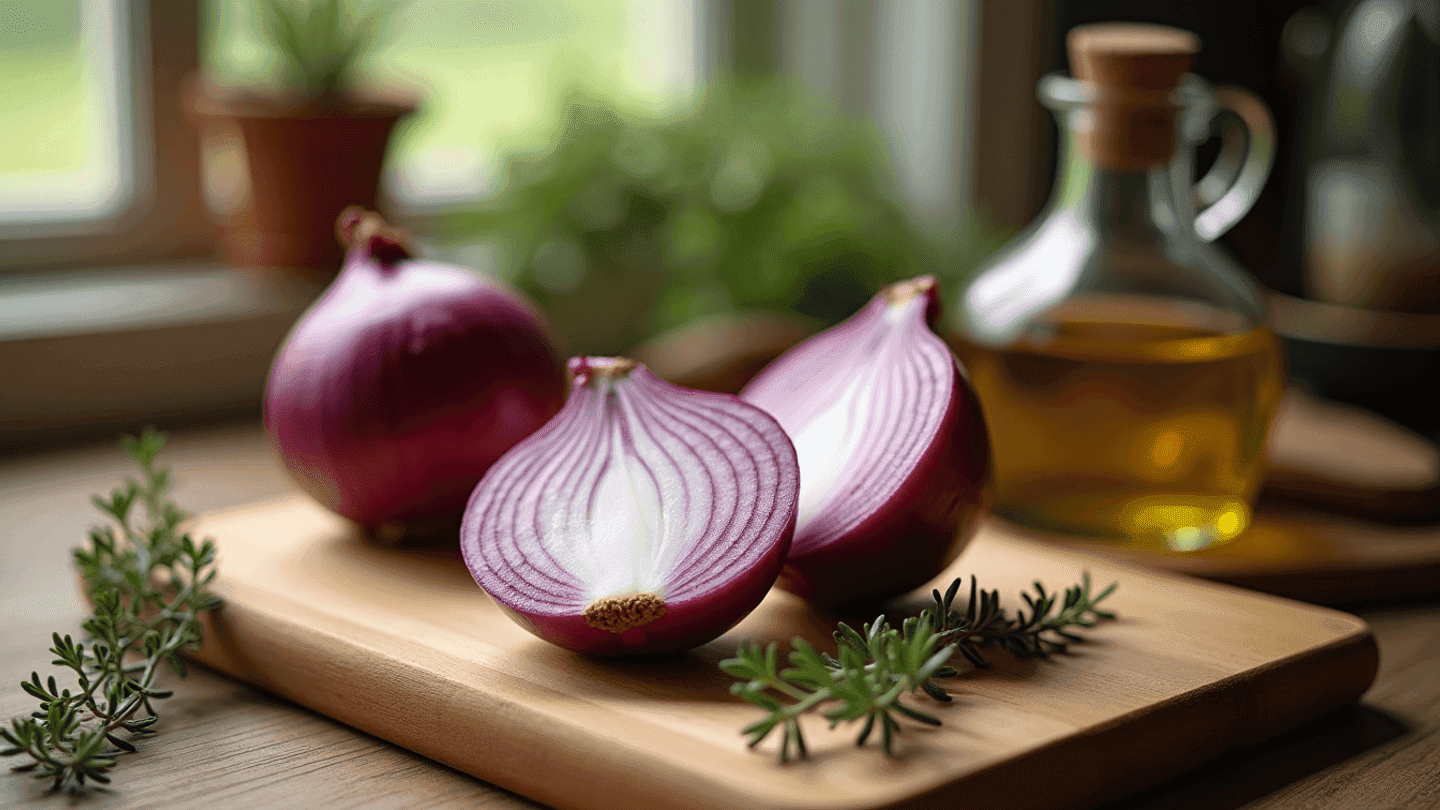
All onions share sulfur-containing compounds (the ones that make you tear up), but red onions stand out because they also contain anthocyanins—the pigments that give the purple-red color—plus plenty of quercetin, a well-studied flavonoid. Research reviews describe onions as a notable dietary source of these compounds, which may help explain many of the observed health effects.
Red onions nutrition basics
From a macros perspective, red onions are mostly water with small amounts of carbohydrates and fiber. Their “power” is less about vitamins and more about plant compounds. Nutrition databases list raw red onions at roughly ~40 kcal per 100 g, which makes them an easy flavor upgrade without moving your calorie budget much.
- Best for: adding crunch, flavor, and phytonutrients to meals
- Not a big deal for: protein, fat, or “superfood” calorie density
Evidence-based red onion health benefits
1) Antioxidant and anti-inflammatory support
Red onions tend to have higher total flavonoids because they contain both quercetin derivatives and anthocyanins. Reviews note that these compounds contribute to antioxidant capacity and can influence inflammatory pathways in lab and human research. Translation: they may help your body handle oxidative stress better, which matters for long-term cardiometabolic health.
2) Heart and blood pressure markers (mostly via quercetin research)
Quercetin has been studied for vascular effects. A human trial reported that quercetin supplementation reduced blood pressure in hypertensive subjects. Another placebo-controlled trial using a quercetin-rich onion skin extract also found improvements in blood pressure outcomes in certain groups. These are supplements/extracts—not exactly the same as eating a few slices of onion—but they support the plausibility behind the cardiovascular angle in discussions of red onion health benefits.
3) Gut support through prebiotic fibers (with a caveat)
Onions contain fructans (a type of fermentable fiber) that can act as prebiotics—fuel for beneficial gut bacteria. That’s good news for many people. The caveat: fructans are also a common trigger for bloating in people with IBS or who are sensitive to FODMAPs. If onions “fight back,” start small and build up. (Your gut microbiome loves consistency; your calendar loves fewer surprise stomach events.)
4) Potential metabolic and longevity support (indirect, dietary pattern)
Red onions are easy to use in meals that tend to be associated with better outcomes: vegetables, legumes, whole grains, and lean proteins. They’re not a standalone solution, but they make healthy eating easier because they improve taste—especially in salads and bowls where “plain” can become “sad.”
How to eat red onions for maximum benefit
If you want the practical version of red onion health benefits, focus on frequency and prep:
- Raw: highest crunch and sharpness; great for salads, salsas, and sandwiches.
- Quick-pickled: keeps a lot of color and bite; easier on breath and sometimes easier on digestion.
- Sautéed/roasted: sweeter and more tolerable for many people; still useful for a veggie-forward diet.
Pro tip: If raw red onion is too intense, soak sliced onion in cold water for 10 minutes, then drain. It mellows the bite while keeping the texture.
How much should you eat?
There’s no official “dose” for red onions. A realistic, sustainable habit is ¼ to ½ a small red onion a few times per week—more if you tolerate it well. The most reliable way to benefit is not hero portions; it’s using them consistently as part of a fiber- and plant-rich pattern.
Who should be cautious?
- IBS / FODMAP sensitivity: onions are a common trigger (fructans).
- Reflux: raw onion can worsen symptoms for some people.
- Allergy/intolerance: uncommon but possible—stop if you get hives, swelling, or breathing symptoms.
- Anticoagulants or upcoming surgery: onions are foods (not drugs), but if you’re managing bleeding risk, keep intake consistent and ask your clinician if you’re making big dietary changes.
General note: This article is educational and not a substitute for medical advice. If you have a medical condition or take medication, consult a qualified healthcare professional.
Storage tips (so they don’t turn into science experiments)
- Whole: store in a cool, dry, dark place with airflow (not next to potatoes).
- Cut: wrap tightly and refrigerate; use within a few days for best flavor.
- Pickled: refrigerated quick-pickled onions usually keep for 1–2 weeks.
FAQ
Are red onions healthier than white or yellow onions?
All onions are healthy. Red onions have the advantage of anthocyanins (the red-purple pigments) in addition to quercetin compounds found across onion varieties, which can increase total antioxidant content.
Does cooking destroy the benefits?
Cooking changes the profile (and can reduce some water-soluble compounds), but cooked onions can still be a valuable part of a healthy diet. If you tolerate them better cooked, that consistency can be more beneficial than forcing raw onions and giving up.
Can red onions help with blood pressure?
Some human studies suggest quercetin (often in supplemental form) can reduce blood pressure in hypertensive subjects. Eating red onions supports overall dietary quality and provides quercetin, but it shouldn’t replace prescribed treatment.
Bottom line
The most realistic takeaway about red onion health benefits: red onions are a low-calorie way to add flavor, fiber, and phytonutrients—especially quercetin and anthocyanins. Use them regularly in meals you actually enjoy, adjust prep for digestion, and let the long game do the work.
Scientific References
- Beneficial Effects of Organosulfur Compounds from Allium cepa on Gut Health: A Systematic Review (Enrique Guillamón, Pedro Andreo‐Martínez, Nuria Mut‐Salud et al., 2021) | View Study ↗
- Quercetin and Its Anti-Allergic Immune Response (Jiří Mlček, Tünde Juríková, Soňa Škrovánková et al., 2016) | View Study ↗
- Quercetin: Its Main Pharmacological Activity and Potential Application in Clinical Medicine (Dengyu Yang, Tiancheng Wang, Miao Long et al., 2020) | View Study ↗
- Recent Advances in Potential Health Benefits of Quercetin (Fatemeh Aghababaei, Milad Hadidi, 2023) | View Study ↗