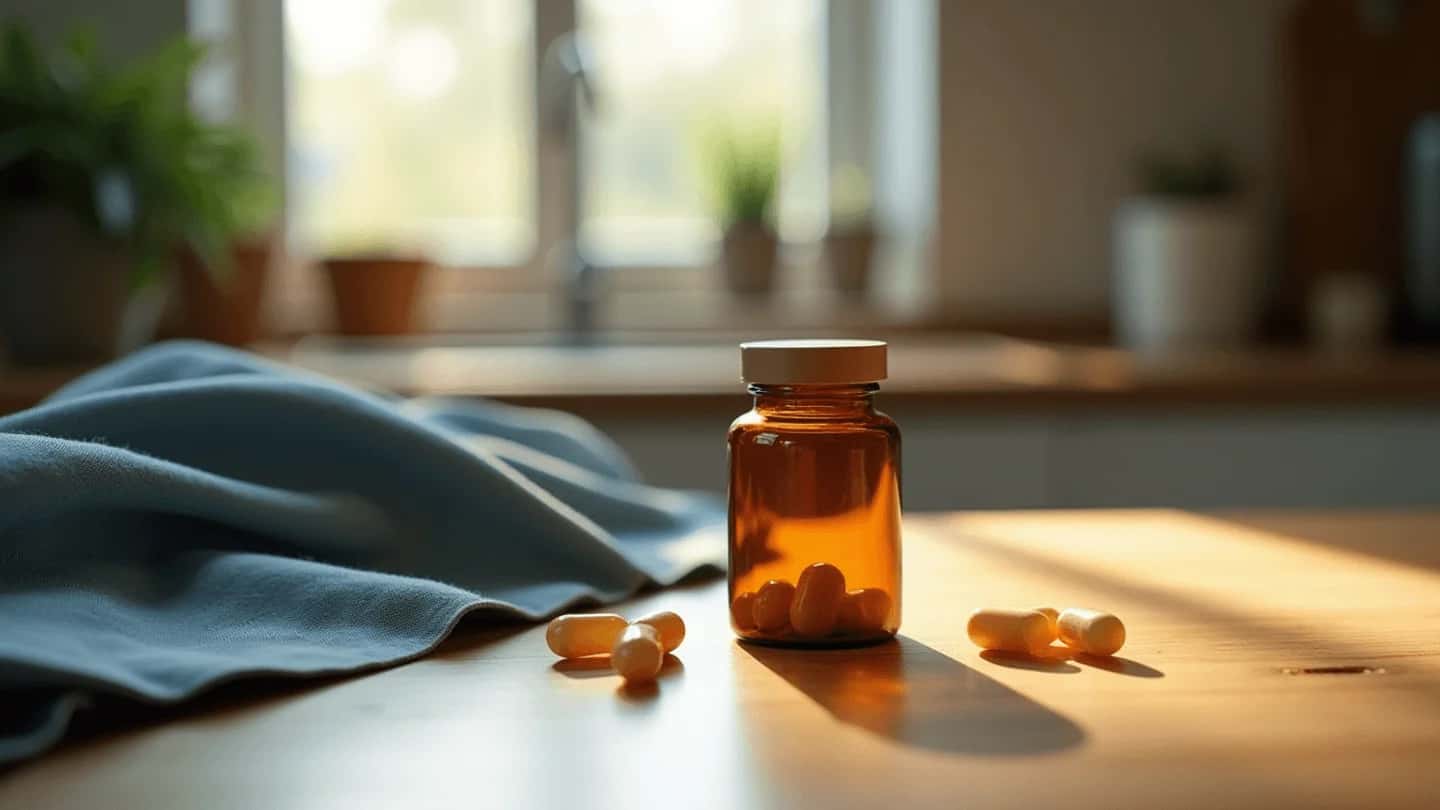
Probiotics: What Works, What Doesn’t & Who Benefits
Probiotics can help in a few specific situations—but they’re not a magic fix for everyone. Learn what counts as a true probiotic, where the evidence is strongest, how to pick a product, and when to skip it.

Key Takeaways
- ✓Probiotics are strain-specific: the name (genus, species, strain) matters more than the hype.
- ✓Best evidence: some strains can reduce antibiotic-associated diarrhea and shorten infectious diarrhea.
- ✓For chronic symptoms like IBS, effects are usually modest—treat it like a time-limited trial, not a forever supplement.
- ✓Choose products that list strains, viable CFUs through shelf life, and realistic storage instructions.
- ✓If you’re immunocompromised, critically ill, or have a central line, talk to a clinician before using probiotics.
Probiotics are one of the most misunderstood “health” products on the planet. Not because the science is fake—there’s good research—but because the marketing makes it sound like any capsule or “probiotic” snack will reboot your gut in 48 hours. (If only.)
This guide is about probiotics what works: where probiotics have the strongest evidence, where the evidence is mixed, and how to choose a product that has a realistic chance of helping.
What probiotics actually are (and what they’re not)
A probiotic is not just “anything fermented” and it’s not “good bacteria” in general. The widely used definition is: live microorganisms that, when administered in adequate amounts, confer a health benefit on the host. That last part—health benefit—is doing a lot of work.
Two practical implications:
- Strain-specific: “Lactobacillus” is like saying “mammal.” Helpful, but not enough. The product should list genus, species, and ideally the strain (e.g., Lactobacillus rhamnosus GG).
- Dose + viability: a probiotic has to be alive (viable) and present in a meaningful amount at the time you take it—not just when it was manufactured.
Probiotics vs fermented foods vs prebiotics vs postbiotics
These terms get blended together in the wild, so here’s the simplest way to keep them straight:
- Fermented foods (yogurt, kefir, sauerkraut, kimchi) may contain live microbes, but they’re not automatically “probiotics” unless they’re shown to deliver a specific health benefit at a defined dose.
- Prebiotics are fibers/substrates that selectively feed beneficial microbes already living in your gut (think: inulin, GOS/FOS, resistant starch).
- Postbiotics are inanimate microbes and/or their components that may still confer a health benefit (useful concept, but different category).
If your goal is long-term gut resilience, you usually want a food-first foundation (fermented foods + prebiotic fiber) and then use a probiotic as a targeted tool—not a lifestyle identity.
Probiotics: what works best (strongest evidence)
Here’s the most honest answer to “Do probiotics work?”: sometimes, for specific outcomes, using specific strains. That’s what “probiotics what works” really means.
1) Antibiotic-associated diarrhea (AAD)
Antibiotics can disrupt your gut ecosystem and increase the risk of diarrhea during or shortly after the course. Multiple randomized trials and systematic reviews suggest certain probiotics can reduce the risk of AAD. Evidence is not identical for every strain, but Saccharomyces boulardii and some Lactobacillus/Bifidobacterium combinations are among the commonly studied options.
Practical take: if you’re prone to AAD, a short course of a well-studied probiotic started with antibiotics (and continued briefly after) may be worth trying. If you’re high-risk or immunocompromised, talk to a clinician first.
2) Acute infectious diarrhea (shortening duration)
For otherwise healthy people, some probiotic strains may shorten the duration of acute infectious diarrhea by roughly about a day in certain studies. That’s not miracle territory—but if you’ve ever had “stuck at home” diarrhea, you know one day matters.
Where the evidence is mixed (works for some, not a guarantee)
1) IBS symptoms (bloating, pain, stool consistency)
IBS is complex and highly individual, so probiotic results vary. Some people report improvements in bloating or pain; others feel nothing (or worse). If you’re exploring probiotics what works for IBS, treat it like a structured experiment:
- Pick one product with clear strain labeling.
- Run a 14–28 day trial.
- Track 2–3 symptoms (bloating, pain, stool form, frequency).
- If there’s no meaningful change, stop and move on.
If bloating is your main issue, you’ll also want our upcoming guide on anti-bloating foods (because diet and meal structure often beat supplements).
2) H. pylori therapy support
Some studies suggest certain probiotics may help reduce side effects of antibiotic therapy used for H. pylori and possibly improve tolerability. This is a “help the process” use-case—not a replacement for medical treatment.
Who should be cautious (or skip probiotics)
Probiotics are generally well tolerated in healthy people, but they’re not risk-free for everyone. Extra caution is warranted if you:
- are immunocompromised (e.g., chemotherapy, transplant meds, advanced HIV),
- are critically ill or in ICU,
- have a central venous catheter,
- have severe intestinal disease with higher risk of bacterial translocation,
- have had serious infections related to fungi/yeast (relevant for S. boulardii).
If any of these apply, treat “probiotics what works” as a clinician-guided decision.
How to choose a probiotic that has a chance of helping
Most people choose probiotics like they choose cereal: by the front label and vibes. Here’s a better checklist:
1) Start with a goal
“Gut health” is not a goal. “Reduce antibiotic-associated diarrhea” is. The clearer the goal, the easier it is to pick an evidence-aligned product.
2) Look for strain labeling
The label should list the microorganisms clearly (genus + species; ideally strain). If it just says “proprietary blend” without details, that’s a red flag.
3) CFUs that make sense (and at the right time)
CFU = colony forming units (a measure of viable microbes). More isn’t always better, but “tiny dose” is often just… tiny. Prefer products that specify CFUs through end of shelf life and provide realistic storage instructions.
4) Storage and stability matter
Some products require refrigeration; others are shelf-stable. What matters is that the product’s storage claims match its stability testing and packaging.
5) Use a time-limited trial
For most non-acute goals, run a 2–4 week trial, then decide: continue, switch, or stop. Your gut does not award loyalty points for taking the same capsule forever.
Food-first: the “quiet” strategy that works long-term
If you want a gut-friendly baseline, build it from food:
- Fermented foods a few times per week (plain yogurt, kefir, live-culture sauerkraut). Start small if you’re sensitive.
- Prebiotic fiber daily from whole foods (beans/lentils, oats, onions/garlic if tolerated, slightly green bananas, cooked-and-cooled potatoes/rice).
- Hydration that supports digestion—especially if you increase fiber. Our hydration guide is here: electrolytes for hydration.
A simple 14-day probiotic trial protocol
If you want the most practical “probiotics what works” approach:
- Pick one product with clear strain labeling.
- Start low for 3–4 days (half dose if possible), then move to label dose.
- Track bloating, stool consistency (Bristol scale), and abdominal discomfort daily.
- Don’t change 10 other things at the same time (otherwise you’ll never know what helped).
- Decide at day 14: continue if clearly better, or stop/switch if not.
FAQ: Probiotics (quick answers)
Do I need probiotics every day?
Most people don’t. Use them for targeted goals (like AAD risk) or as a time-limited trial for symptoms. Long-term gut health is mostly food + habits.
Is yogurt enough?
For many people, regular intake of live-culture yogurt/kefir plus fiber is a great baseline. Supplements can be useful when you want a specific strain/dose not easy to get from food.
How long until I notice effects?
For acute situations (like AAD prevention), effects relate to the antibiotic window. For IBS-like symptoms, evaluate over 2–4 weeks.
Can probiotics cause bloating?
Yes—especially at the start or if the product contains fermentable ingredients. If symptoms worsen significantly, stop and reassess.
Should I take probiotics with antibiotics?
Some evidence supports this for AAD prevention with certain strains. Separate doses by a couple of hours if possible (and follow clinician guidance if you’re high-risk).
What’s better: probiotics or prebiotics?
They do different jobs. Prebiotics help feed your existing beneficial microbes. Probiotics add specific live microbes. Many people benefit most from food-first prebiotics plus occasional targeted probiotic use.
Bottom line
Probiotics are neither snake oil nor magic. They’re a tool that can help in a few specific situations—especially when you match the strain and dose to the outcome you want. If you remember one thing, remember this: probiotics what works is a question you answer with details, not vibes.
Scientific References
- An update and overview of the various health-related benefits of probiotics: A focus on clinical trials demonstrating efficacy, tolerability and use in patients with impaired glucose tolerance and type 2 diabetes (Toshimitsu T, Irie J, 2025) | View Study ↗
- Cardiometabolic benefits of Lacticaseibacillus paracasei 8700:2: A randomized double-blind placebo-controlled trial (Yang J, Huang J, Huang Z et al., 2023) | View Study ↗
- Effect of Intake of Bifidobacteria and Dietary Fiber on Resting Energy Expenditure: A Randomized, Placebo-Controlled, Double-Blind, Parallel-Group Comparison Study (Baba Y, Azuma N, Saito Y et al., 2024) | View Study ↗
- Probiotic strategies for the treatment and prevention of bacterial vaginosis (MacPhee RA, Hummelen R, Bisanz JE et al., 2010) | View Study ↗
- The impact of probiotic on gut health (Collado MC, Isolauri E, Salminen S et al., 2009) | View Study ↗